Monday, September 8, 2014

The Battle of Raclawice

General Kosciusko in the white coat
Panorama painting was a popular form of entertainment in the late nineteenth century and usually depicted a crucial battle during various stages. The canvases were enormous and were designed to be toured and exhibited in round tents. Due to their sheer size and hard working life, few panorama paintings have survived and this one illustrating the Battle of Raclawice during the Kosciuszko Uprising is the only one in Poland. Panorama painting was also considered too mass market to be taken seriously as 'art' and no  took much effort to preserve them.

Painted in 1894 and measuring 15 metres by 114 metres the painting commemorates the Battle of Raclawice in 1794 when a combination of Polish troops and armed peasants under the leadership of Tadeusz Kosciusko defeated a superior force of Russian troops. Of course Poland lost the war, but this battle always remained as a symbol of Poland's fight for independence. Even now viewing the painting is a reverential experience and one is expected to behaviour with respect as you would in a church.

Originally located in Lvov, the painting was moved to Wroclaw in 1945 but not surprisingly given the subject, during the Soviet occupation of Poland, the painting was 'undergoing 'restoration' and finally publicly displayed after 1985.


It is curious that Australia's highest mountain should be named after someone who had no connection whatsoever with that country. Apparently it was given that name as it bore some resemblance to the Kosciuszko Mound in Krakow. Of course the Australian's didn't get the spelling right and this was only corrected in 1997

Sunday, September 7, 2014

Wroclaw

Polish is an impossible language - how can a word like Wroclaw end up being pronounced Vrotswaf?
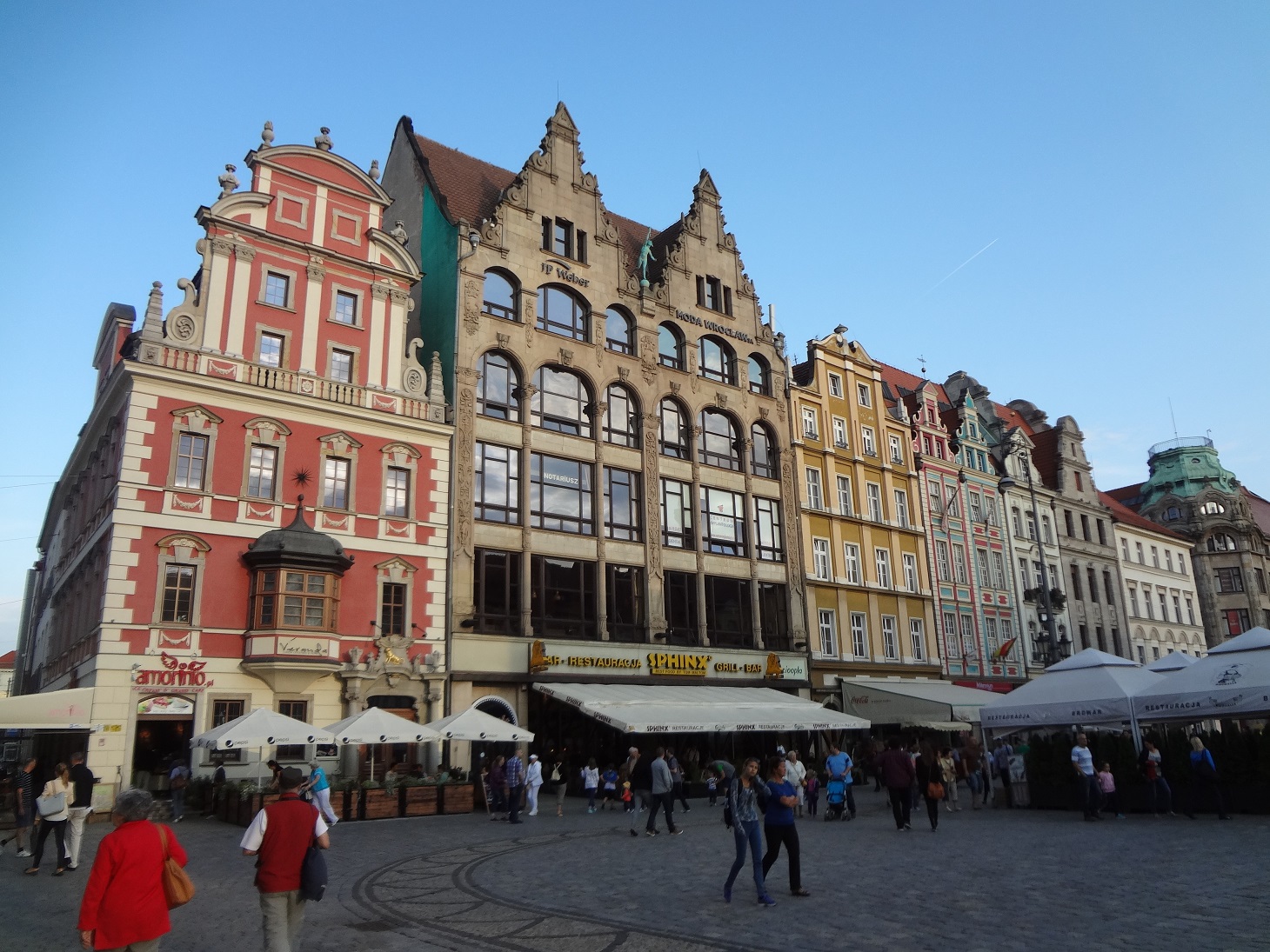
Unpronounceable Wroclaw is an attractive city in Western Poland not too far from the German border. The old city, focused on two squares the Rynek and the Salt Market, attracts a large number of visitors especially the Town Hall, a masterpiece of late Gothic architecture.

The tourists are mainly German, many of whom have connections to this once German city. Now thoroughly Polish, the city was known as Breslau prior to WWII. Before the war the Polish population of the city was less than one percent, while in the surrounding rural area Poles dominated. The city escaped destruction during most of the war until a disastrous two month siege by Russian troops in the dying months of the war - in fact Breslau didn't surrender until a few days before the German capitulation. By then the city was in ruins and most of the remaining 200,000 Germans left in the city (as many had left before the Russians arrived), all moving west by 1947.

Like other Polish cities, the city, now named Wroclaw, was lovingly rebuilt, while removing all traces of its German history including destroying the old German cemeteries.

Isn't it amazing that Poland could rebuild so many of it's devastated cities despite losing 20% of the population, the economy ruined and the country occupied by the Soviets, when New Zealand finds it impossible to rebuild the Christchurch Cathedral?


Since Polish independence from the Soviets, Poland and Germany have been closely allied and very few traces of bitterness towards Germans lingers (the opposite can be said of Polish/Russian relations).

However, Angela Merkel's conciliatory approach to Russia over the Ukraine has deeply disturbed the Poles who now see their country almost on the front line with an aggressive Putin. This is despite Poland being a more important German trading partner than Russia.


Tuesday, September 2, 2014

Ferrara

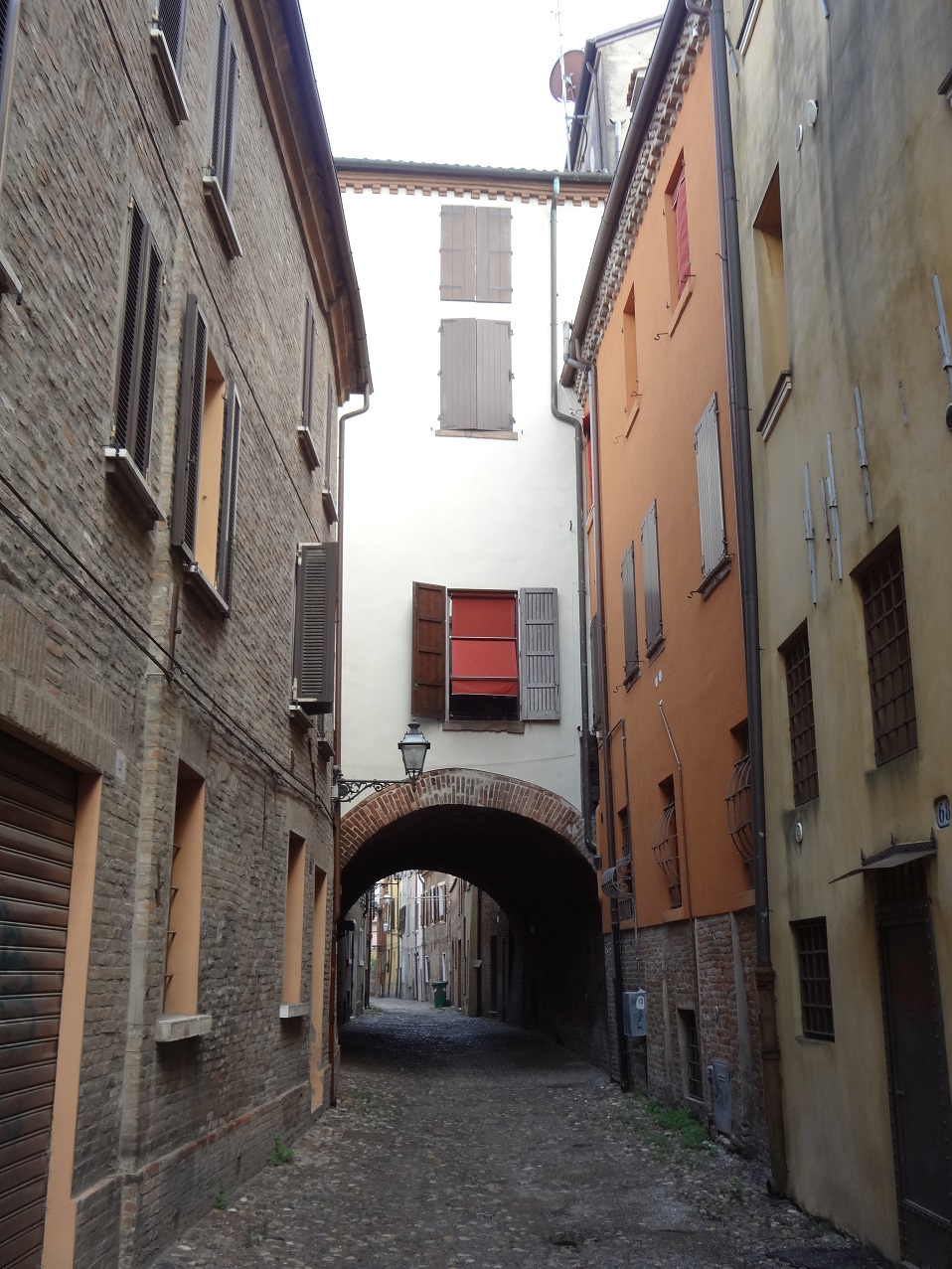
Ferrara receives even fewer tourists than Ravenna, yet it is a beautiful medieval and renaissance city with a fabulous moated castle and stunning Renaissance town hall and cathedral. The oldest part of the city is virtually untouched since the 14th century, while the 'newer' Renaissance' districts contain numerous superb palazzos. The most famous is the 'diamente palazzo' or Diamond Palace decorated with over 8000 'diamonds'. You are likely to be the only foreign tourists here.


Sunday, August 31, 2014

High Tide

I always thought that the high tide floods in Venice occurred in exceptional circumstances such as spring tides, but it is in fact a regular thing especially this summer with so much rain. In the photos water blocks the entrance to St Mark's Cathedral and in fact water enters the church itself. What looks like puddles in the square is actually sea water coming up through storm water drains - doesn't stop the huge numbers of tourists who visit Venice every day.


Saturday, August 30, 2014

The Two Towers

After a few
My last visit to Bologna was in 1979 and I remember it as an attractive city then and it hasn't changed much since then. The most appealing thing about Bologna is that is has nothing important to see or do so it attracts very few tourists. However, it is a great base to visit northern Italy with Florence, Venice, Parma, Modena, Ravenna, Ferrara and Verona all easily accessible by train and it is much less expensive to stay here.
 Best  of all Bologna is famous for its food (especially spaghetti bolognaise which is known locally as ragu). Every where there are small local restaurants many attached to delicatessens so you can chose the food you want to eat. Unlike the more touristy places, the locals are friendly and it is easy to settle for a night out.

That said it does have two outstanding medieval towers. Built in the 11th century, these towers were built to protect individual families during times of conflict. Common in most Italian town, most of the towers have been long since pulled down. In Bologna only 20 out of the original 160 towers survive, two of which have been become symbols of this city. The tallest stands 100 metres and is still in good condition 1000 years later. Right next door, a much shorter tower has a serious lean, though apparently is in no danger of falling down. Its a bit of climb up the wooden stairs but the view from the top is worth it.


The leaning tower is right below

Friday, August 29, 2014

Ravenna

Located on the Adriatic coast, Ravenna was briefly the capital of the Roman Empire in the 4th century after which it fell under Byzantine control for over 200 years. However, the city rapidly declined once the river on which the city depended silted up and trade ceased. Neglected until the late 19th century when a canal was constructed, the city has the most intact Byzantine buildings in the world.

Within these buildings are the most extraordinary mosaics. Not only are these mosaics undamaged but they are incredibly vibrant and colourful.

This is also the final resting place of Dante after his bones were dragged around for several hundred years....
 
Of course, very few tourists come here, which makes Ravenna even more appealing.


Monday, August 25, 2014

The Madonna of Sweat

A major draw card in the city of Ravenna for the more religiously inclined is the legendary, but not charmingly entitled, Madonna of Sweat. Dating back to the 10th century, the icon originally occupied a niche in a street opposite a tavern. One evening a drunken soldier slashed the painting with his sword and resulting cut miraculously sweated blood. After this the painting was moved to its own chapel within the main Cathedral. The  Madonna of Sweat is also credited with the saving the city from the plague in 1629.